
One of the most common questions homebuyers and homeowners ask is: “What are mortgage rates…
Self-Employed Mortgage Options: Why Revenue Isn’t the Same as Qualifying Income
Self-Employed and Need a Mortgage? Why Your Revenue Is Not the Number Mortgage Underwriters Use
Being self-employed can be a great way to build a business, control your income, and take advantage of legitimate tax deductions.
But when it comes time to qualify for a mortgage, many business owners run into a frustrating surprise:
Your business may generate a lot of revenue, but that does not necessarily mean a traditional mortgage lender will consider all of that money to be your qualifying income.
For conventional mortgage underwriting, lenders generally analyze the income that is actually available to the borrower after business expenses, using tax returns and other financial documentation. Fannie Mae specifically requires lenders to evaluate a self-employed borrower’s business income or loss and determine the amount of stable, continuous income available to the borrower.
That distinction between revenue and profit is one of the biggest reasons self-employed borrowers sometimes have a harder time qualifying for a traditional mortgage.
The good news is that a traditional mortgage is not always the only option.
Depending on your circumstances, there may be alternative mortgage programs that look at your finances differently, including programs that use bank statements rather than relying primarily on taxable income.
Revenue Is Not the Same as Qualifying Income
This is probably the most important concept for a self-employed homebuyer to understand.
Imagine your business generates:
$300,000 in annual gross revenue.
That sounds like a substantial amount of income.
But suppose your business also reports:
$220,000 in legitimate business expenses.
That leaves approximately:
$80,000 in business profit before considering any additional underwriting adjustments.
A traditional mortgage underwriter generally does not simply look at the $300,000 of revenue and say that you earn $25,000 per month.
Instead, the underwriter analyzes the business income shown on the applicable tax returns and determines how much stable income is actually available to you. Fannie Mae’s self-employment guidance specifically focuses on business income or loss reported on tax returns, while its Schedule C guidance explains that income or loss from a sole proprietorship is calculated on Schedule C and then transferred to the borrower’s Form 1040.
That can create a very different mortgage qualification picture.
Why Tax Deductions Can Create a Mortgage Problem
Business owners naturally want to take legitimate tax deductions.
That is one of the benefits of owning a business.
You may deduct eligible expenses such as:
- Advertising
- Office expenses
- Business vehicles
- Equipment
- Professional services
- Insurance
- Rent
- Payroll
- Travel
- Supplies
- Other ordinary and necessary business expenses
Those deductions can reduce taxable business income.
That may be good from a tax-planning perspective.
But it can create a problem when applying for a traditional mortgage because the same deductions that reduce your taxable income may also reduce the income available for mortgage qualification.
In other words:
The IRS may be happy that your taxable income is lower.
The mortgage underwriter may not be.
A Simple Example
Consider a self-employed borrower whose business deposits approximately $25,000 per month.
That equals:
$300,000 per year in gross business revenue.
After business expenses, however, the tax return shows only $75,000 in qualifying annual income.
For mortgage purposes, the underwriter is generally not going to simply qualify the borrower using $300,000 of annual revenue.
The analysis will focus much more heavily on the business’s income after expenses, along with any allowable underwriting adjustments.
That difference can dramatically affect purchasing power.
A borrower may feel like:
“My business brings in $25,000 every month. How am I not qualifying?”
The answer is often that gross deposits and mortgage qualifying income are two very different things.
Why W-2 Borrowers Often Have an Easier Time
For a typical salaried employee, income calculation can be relatively straightforward.
Someone earning a $120,000 salary may generally have approximately $10,000 per month of gross employment income before taxes and deductions, subject to the applicable underwriting rules.
A self-employed borrower earning the same amount economically may have a much more complicated calculation.
The lender may need to review:
- Personal tax returns
- Business tax returns
- Schedule C
- Schedule K-1
- Form 1120S
- Form 1065
- Profit and loss statements
- Balance sheets
- Business ownership percentage
- Business liquidity
- Income trends
- Current-year performance
Freddie Mac similarly maintains specific requirements for determining qualifying income for self-employed borrowers, including different business structures and tax-return documentation.
That is why getting a mortgage while self-employed can feel considerably more complicated than getting one as a salaried employee.
Should You Just Report More Profit to Qualify for a Mortgage?
This is where the conversation gets interesting.
Sometimes a self-employed borrower is told:
“You need to show more income on your tax returns if you want to qualify.”
Technically, reporting more taxable profit may increase the income available for traditional mortgage qualification.
But that does not automatically mean it is the best financial strategy.
Suppose increasing your reported taxable income substantially results in thousands or even tens of thousands of dollars in additional taxes.
You may then qualify for a conventional mortgage with a lower interest rate.
But was paying substantially more in taxes worthwhile just to obtain that rate?
The answer depends on the numbers.
This is where alternative mortgage programs can become worth considering.
Bank Statement Mortgages May Offer Another Option
A bank statement mortgage is generally designed for self-employed borrowers whose cash flow may tell a stronger story than their tax returns.
Instead of relying primarily on taxable income reported on the borrower’s tax return, certain non-QM programs may analyze deposits into personal or business bank accounts to estimate qualifying income.
The exact calculation varies significantly by lender.
Depending on the program, the lender may review:
- 12 months of bank statements
- 24 months of bank statements
- Business bank statements
- Personal bank statements
- Eligible deposits
- An expense factor
- A third-party expense analysis
- A profit and loss statement
These loans generally have different pricing and underwriting standards than traditional conventional financing.
But that does not automatically make them a bad financial decision.
The Question Should Not Be “Which Rate Is Lower?”
Suppose you have two choices.
Option 1: Traditional Mortgage
You restructure your tax strategy and report substantially more taxable business income.
That allows you to qualify for a conventional mortgage with a lower rate.
But doing so costs you an additional $20,000 or $30,000 in taxes.
Option 2: Bank Statement Mortgage
You continue taking appropriate business deductions and qualify based more heavily on business cash flow.
The mortgage rate may be higher.
But perhaps the additional mortgage cost is only a few thousand dollars per year.
Which option is actually cheaper?
It may be the mortgage with the higher interest rate.
That sounds backwards until you compare the total financial impact.
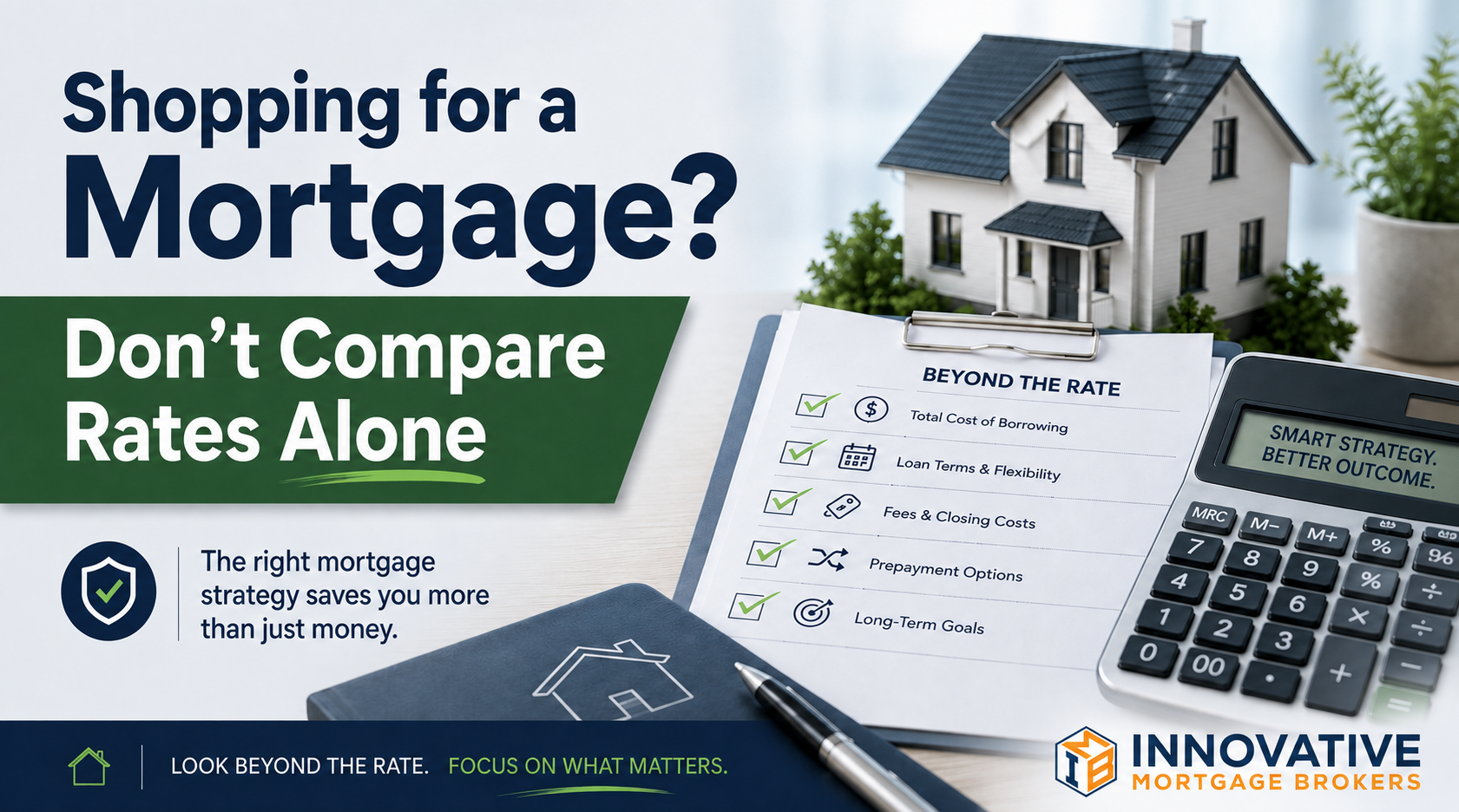
This is why I believe self-employed borrowers should look beyond the rate alone.
Higher Mortgage Rate vs. Higher Taxes
Here is a simplified hypothetical example.
Imagine a borrower could obtain:
Traditional mortgage: 6.5%
But qualifying requires restructuring taxable income in a way that results in an additional $25,000 tax liability.
Alternatively:
Bank statement mortgage: 7.5%
Suppose the higher mortgage rate costs approximately $5,000 more during the first year.
Paying $25,000 more in taxes to save $5,000 in mortgage interest would obviously deserve a much closer look.
That does not mean the bank statement mortgage is always better.
It means the comparison should be based on the total cost, not simply the mortgage rate.
And tax decisions should always be discussed with a qualified tax professional.
This Is Where a Mortgage Strategy Matters
A self-employed borrower should not automatically assume:
Conventional = good
and
Bank statement = bad
The better question is:
Which financing strategy makes the most financial sense for me?
That may require comparing:
- Mortgage rate
- Points
- Closing costs
- Monthly payment
- Down payment
- Tax consequences
- Expected time in the loan
- Refinancing possibilities
- Cash reserves
- Business cash flow
- Future income expectations
Sometimes traditional financing clearly wins.
Sometimes an alternative program may make considerably more sense.
Traditional Mortgage Income Is Not Always Just “Net Profit”
There is an important nuance here.
Although mortgage underwriting heavily relies on tax-return income for self-employed borrowers, the calculation is not always as simple as taking one net-profit number and stopping there.
Certain non-cash expenses or other allowable items may sometimes be added back when calculating qualifying income.
For example, Fannie Mae provides detailed cash-flow analysis worksheets that allow lenders to evaluate different components of self-employed income rather than relying on gross receipts alone.
That is another reason it is helpful to have someone experienced with self-employed mortgage qualification review the complete tax returns before assuming you do not qualify.
Don’t Change Your Taxes Before Talking to a Mortgage Professional
One of the biggest mistakes I see is a self-employed borrower making major tax decisions specifically because they want to qualify for a mortgage.
Before doing that, have the mortgage numbers calculated first.
You may discover that:
- You already qualify.
- Certain income can be added back.
- Another conventional lender calculates the file differently.
- A bank statement program works.
- Another non-QM mortgage program works.
- A larger down payment solves the problem.
- You can qualify for a lower purchase price without changing your taxes.
- The additional taxes would cost substantially more than the alternative mortgage.
Once you know the mortgage options, you can discuss the tax implications with your accountant or tax professional and make a much more informed decision.
Other Mortgage Options for Self-Employed Borrowers
Bank statement loans are not the only alternative.
Depending on your financial situation, there may be programs using:
Bank Statement Income
Qualification based on eligible deposits rather than traditional taxable income.
Profit and Loss Programs
Certain programs may allow qualifying income to be determined using a qualifying profit and loss statement, subject to lender requirements.
Asset-Based or Asset-Depletion Income
Borrowers with significant liquid assets may potentially convert eligible assets into qualifying monthly income under certain mortgage programs.
DSCR Loans
For investment properties, a DSCR loan may qualify primarily based on the property’s rental income rather than the investor’s personal taxable income.
The right program depends heavily on the borrower and property.
Why Working With a Mortgage Broker Can Help Self-Employed Borrowers
Self-employed borrowers are one of the clearest examples of why lender choice matters.
Different lenders may have different:
- Bank statement programs
- Expense factors
- Credit score requirements
- Down payment requirements
- Reserve requirements
- Loan limits
- Pricing
- Property guidelines
- Non-QM programs
A borrower who does not qualify with one lender may have another legitimate financing option elsewhere.
That does not mean there is always a solution.
But it does mean that being declined by one bank does not necessarily tell you what every lender can do.
A mortgage broker who works with multiple lenders can compare both traditional and alternative financing options rather than trying to force every self-employed borrower into the same program.
Self-Employed? Your Tax Return May Not Tell the Whole Story
If you own a successful business but have been told that your taxable income is too low to qualify for the mortgage you want, do not immediately assume that buying a home is impossible.
Your business may have:
- Strong revenue
- Consistent deposits
- Healthy cash flow
- Significant assets
- Years of operating history
while your taxable income remains comparatively low because of legitimate business expenses.
A traditional mortgage may still work.
And if it does not, there may be other options worth comparing.
The goal should not simply be to find the lowest mortgage rate.
The goal should be to determine which financing strategy gives you the best overall financial outcome.
Frequently Asked Questions About Mortgages for Self-Employed Borrowers
Why is it harder to get a mortgage when you’re self-employed?
Self-employed income generally requires more analysis than salaried employment income. Lenders may need to review personal and business tax returns, business income and expenses, ownership, income trends, and the financial strength of the business to determine stable qualifying income.
Do mortgage lenders use revenue or profit for self-employed borrowers?
For traditional mortgage underwriting, lenders generally do not simply use gross business revenue as qualifying income. They analyze income available after business expenses, typically using tax returns and applicable underwriting adjustments.
Can business write-offs hurt my mortgage qualification?
They can. Legitimate deductions may reduce taxable business income, and lower taxable income can reduce the amount of self-employed income available for traditional mortgage qualification.
Do I need two years of tax returns if I’m self-employed?
Documentation requirements vary depending on the mortgage program, length of self-employment, automated underwriting results, lender requirements, and other factors. Self-employed borrowers should have their individual situation reviewed rather than assuming a universal two-year requirement. Fannie Mae and Freddie Mac both maintain detailed documentation requirements for self-employed borrowers.
Can I get a mortgage without using tax returns?
Potentially. Certain alternative or non-QM mortgage programs may permit qualification using other documentation, such as bank statements. Program requirements, rates, down payments, and eligibility vary by lender.
Are bank statement mortgages more expensive?
They often carry higher interest rates or different pricing than conventional mortgages because they use alternative income documentation. The more important question is whether the total additional mortgage cost is greater or less than the financial impact of changing your tax strategy simply to qualify conventionally.
Should I report more income just to qualify for a mortgage?
That is a decision to discuss with both your mortgage professional and a qualified tax professional. Before changing your tax strategy, compare the actual cost of traditional financing with available alternative mortgage programs.
Mortgage Options for Self-Employed Borrowers in Pennsylvania and Florida
At Innovative Mortgage Brokers, we regularly work with self-employed borrowers whose tax returns do not necessarily reflect the full strength of their businesses.
We can compare traditional mortgage financing with alternative programs, including bank statement and other non-QM options, to determine which structure may make the most financial sense.
Sometimes the conventional mortgage is clearly the better choice.
Other times, paying a somewhat higher mortgage rate may be considerably less expensive than restructuring your taxes simply to show significantly more taxable income.
The key is to run the numbers before making the decision.

Related Posts